





Parking provision
Housing statistics and English Housing Survey, glossary, published by the Department for Levelling Up, Housing and Communities in 2019, includes the following categories of parking provision for dwellings:
- Adequate parking: street parking generally being available outside or adjacent to the house or block of flats where the surveyed flat is located and the road is sufficiently wide to allow easy passage of traffic.
- Inadequate parking: it is difficult to park outside the house or block of flats where the surveyed flat is located. This might be due to the volume of cars competing for places, or due to legal restrictions on parking.
- None: it is not possible to park outside the house or block of flats where the surveyed flat is located at any time due to either the distance from the road or permanent parking restrictions.
It states: ‘The parking provision does not have to be located on the plot of the dwelling – an off street parking space or garage may be in a block further down the street or round the corner.... Communal parking relates to car parking provision for the module or block of which the survey dwelling is a part. Dwellings may have access to more than one type of communal parking facility. Other off street parking refers to either a designated parking space or a car port at the dwelling plot.’
[edit] Related articles on Designing Buildings
- Car park.
- Kiss and ride.
- Multi-storey car park.
- Open sided car park.
- On-street parking.
- Overview of the road development process.
- Road traffic management.
- Supermarket security and COVID-19.
- Traffic engineering.
- Transport design and health.
- Trinity Square car park.
- Types of road and street.
- Underground car park.
- Welbeck Street car park.
Featured articles
Check out some of the best features and news from Designing Buildings as well as key stories from around the web.
Undervaluing our industrial past

Heritage value changes as taste for building styles changes.
Changing expectations around competence and compliance

New information sheet from CIAT.
Grenfell investigation files passed to CPS

Angela Rayner apologises on behalf of the British state.

Electrical contractors need to understand the practical implications.

The real barrier to getting more value from digital technology.

Your guide to The Construction Reset at UKCW Birmingham.

Accommodating the Victorian and Edwardian working woman. Book review.
Rethinking passive fire protection in design

PFP demands the same level of design rigour as structure or services.

38% of Gen Zs feel safe when a fire door is wedged open.
Stunning images from around the world

Shortlist for CIOB’s Art of Building photography competition.

Guidance for conversion of traditional pre-1919 stone buildings.
Industrial heritage in the Ruhr
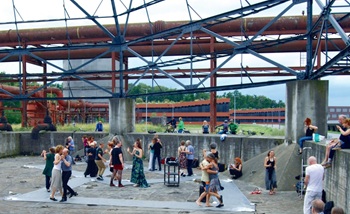
A marked difference to the fate of industrial landscapes in the UK.
Comments
[edit] To make a comment about this article, or to suggest changes, click 'Add a comment' above. Separate your comments from any existing comments by inserting a horizontal line.